Get a complete overview of Gwadar including location in Balochistan, history, climate, port importance, road access, maps, and future development potential.
 Where
Where What
WhatGwadar feels like a city you hear about in headlines, but once you reach the coast, it’s surprisingly quiet. It sits in southwestern Balochistan on the Arabian Sea, close to the Gulf of Oman. The landscape is dry, the light is sharp, and the sea breeze makes the heat feel a little softer than you’d expect.
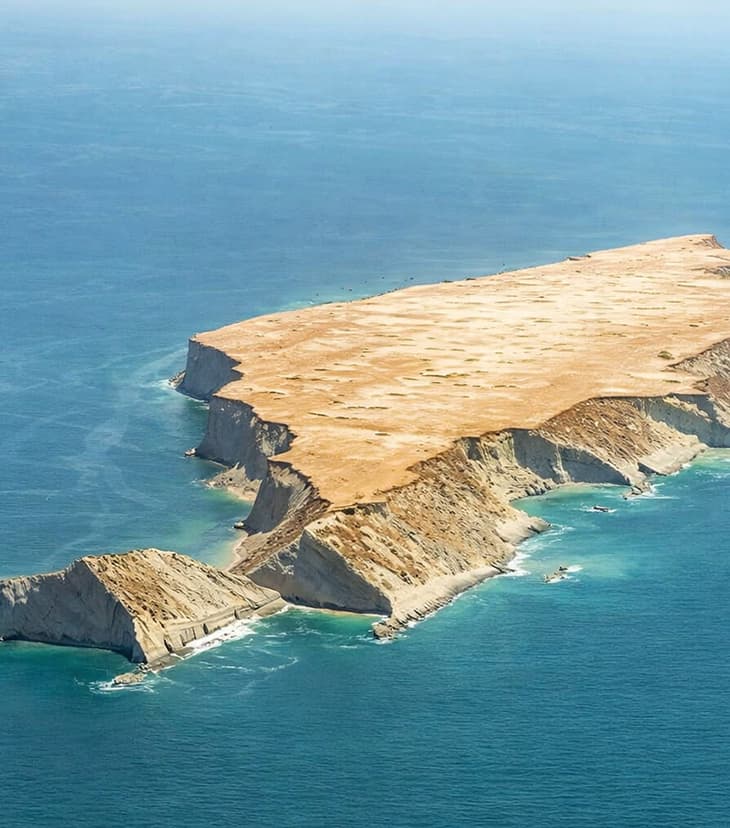
If you are planning a trip, most people start by searching a map of Gwadar to understand how the city is laid out. That makes sense because Gwadar is built on a distinct hammerhead shaped peninsula. From above, the land curves into the sea in a way that instantly explains why viewpoints matter so much here.

Gwadar is part of Balochistan and sits along Pakistan’s southern coastline. It is far from the crowds of bigger coastal cities, which is exactly why some people love it. The city’s position also explains its strategic value. You are not just visiting a beach town, you are visiting a coastal node that connects sea routes, national highways, and long term trade planning.
What makes the story interesting is the contrast. Traditional coastal life still exists, but it now shares space with expanding infrastructure, planned areas, and a growing national focus on the city’s future. This mix is part of what visitors notice most. It feels like a place in transition, without losing its roots.
When people search history of Gwadar, they usually want the simple version. Gwadar began as a small coastal settlement shaped by fishing culture and sea trade.
Over time, Gwadar’s importance grew because of its location. The city’s identity gradually shifted from a local fishing hub to a place discussed in larger regional contexts. Today, you still see the older Gwadar in the working waterfront and local neighborhoods, even as newer development continues to change the skyline and road network.
What makes the story interesting is the contrast. Traditional coastal life still exists, but it now shares space with expanding infrastructure, planned areas, and a growing national focus on the city’s future. This mix is part of what visitors notice most. It feels like a place in transition, without losing its roots.
The climate in Gwadar is hot and dry along the coast. The sea breeze can make the evenings feel better than they do in inland Balochistan, even though the summers are hot. Many travelers check the weather in Gwadar before making plans because winters are warm and often better for exploring.
That dryness shapes the scenery too, with rocky hills, sandy stretches, and wide open coastal views. For most people, the best time to move around is early morning and late afternoon, especially if you plan to climb viewpoints or spend long
hours outside.
Even when the temperature is high, the wind can be strong near the coast. If you are doing photography or viewpoint visits, aim for golden hour. The light in Gwadar can be stunning when the sun drops toward the sea.
There are a lot of searches for Gwadar Port, and for good reason. It is a deep sea port that is important for trade, logistics, and long-term connections. When people ask why Gwadar Port is important, they usually mean why this city keeps coming up in talks at the national and regional levels.
The port is more than just a place where ships come and go. It has come to stand for planning for the future, access to the region, and the idea of Gwadar as a growing coastal gateway. Even if you're just passing through, seeing the port area will help you understand why people think the city has potential.
People often talk about Gwadar's future in terms of infrastructure and growth. That includes roads, homes, and other things that help trade and travel. The city is still changing, and development takes time, but the path is clear.In the next few years, Gwadar will become more connected, better planned, and more visible across the country.
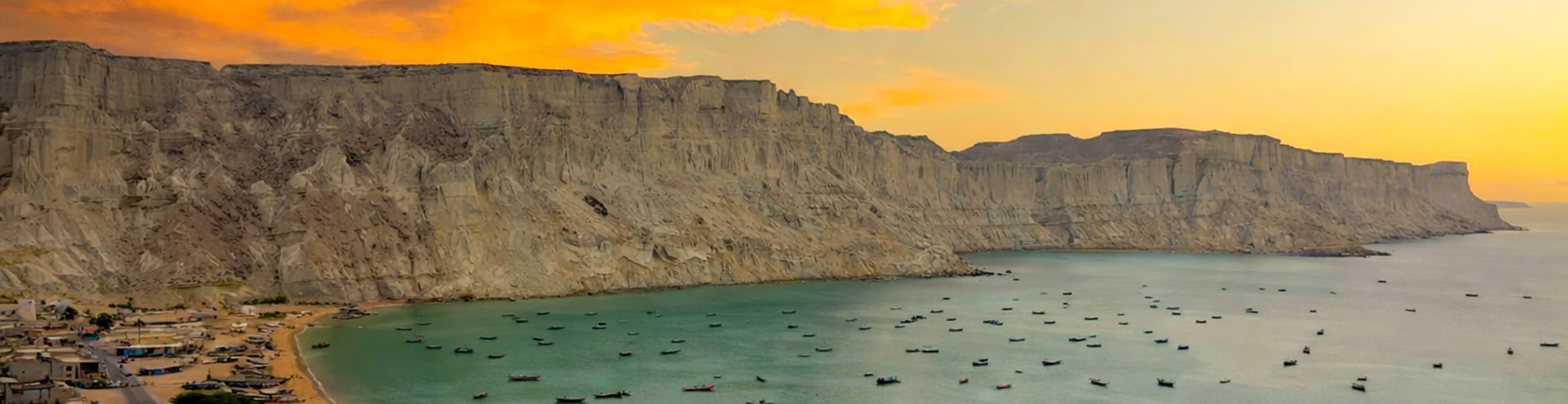
A natural view of the Makran coastal area near Gwadar, where rocky shorelines meet the Arabian Sea, reflecting the raw and quiet character of Pakistan’s southwestern coast.
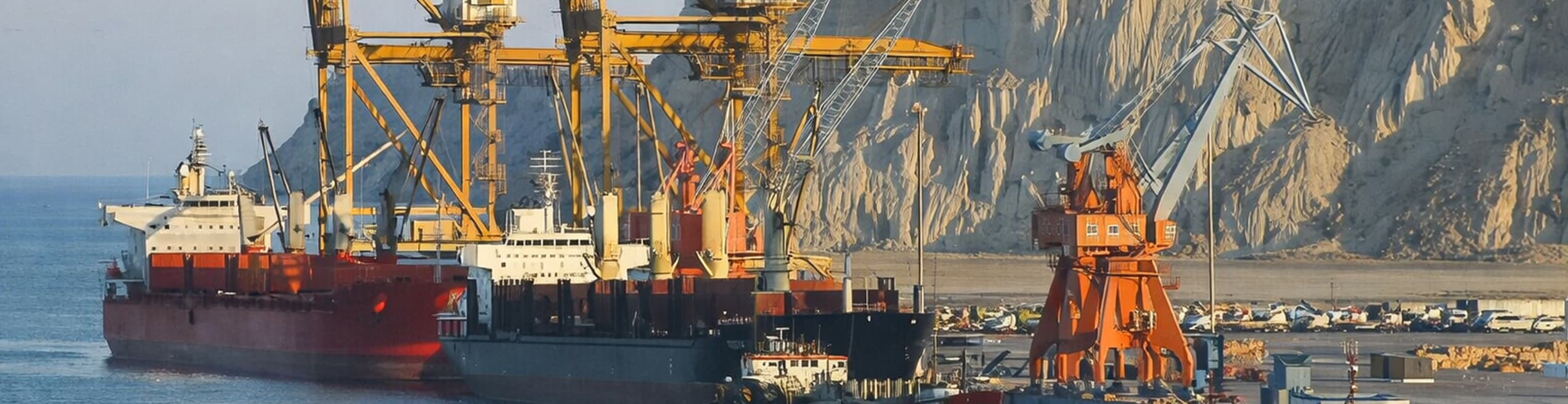
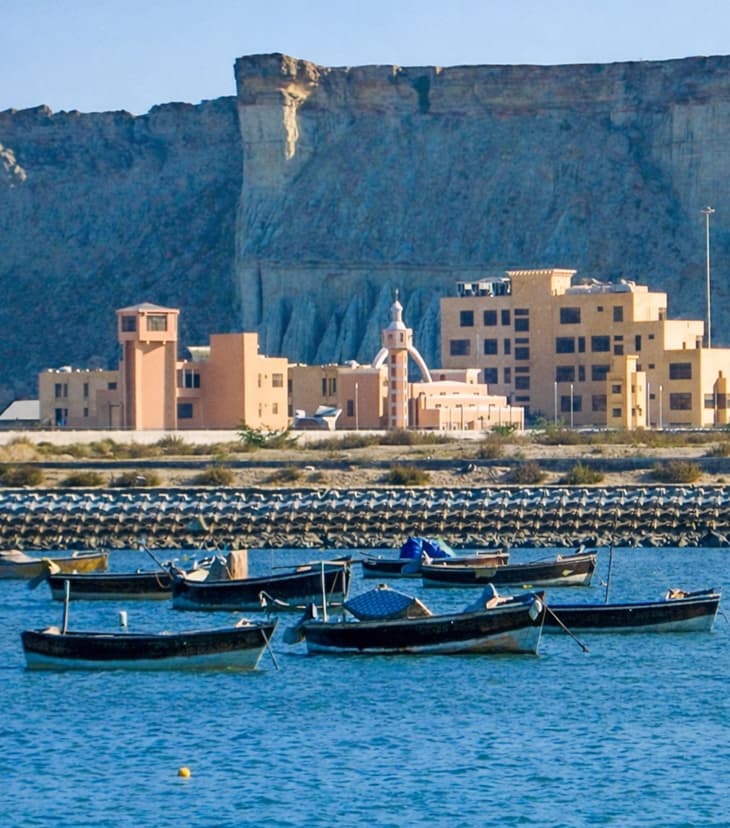
A view of Gwadar Deep-Sea Port on Pakistan’s Arabian Sea coast, an important maritime hub known for its strategic location near the Gulf of Oman and growing port infrastructure.
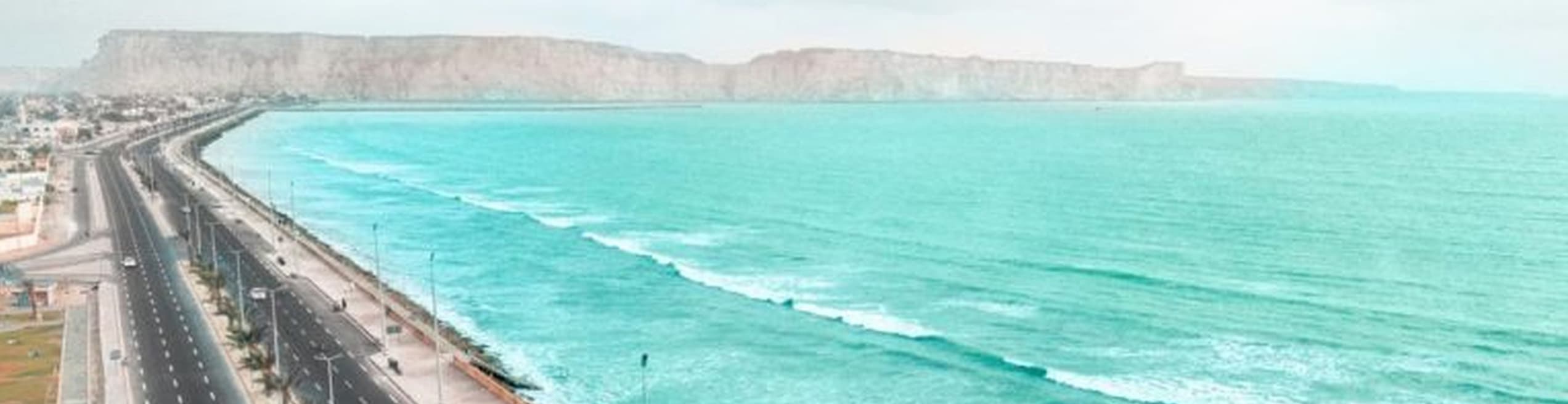
A stunning stretch of the Makran Coast, showing the rugged cliffs and Arabian Sea views along the Makran Coastal Highway, one of Pakistan’s most scenic coastal drives on the way to Gwadar.
For road travel, the Makran Coastal Highway is the main route people talk about. Many visitors plan Karachi to Gwadar as a coastal road trip because the drive itself is part of the experience. The scenery changes quickly, and the coastline keeps appearing in unexpected ways.
If you are coming from inland Balochistan, Quetta to Gwadar routes also connect the city with the province’s interior. Travel times depend on conditions and stops, which is why distance based searches are common when planning a trip to Gwadar.
Gwadar airport is another common search, especially for travelers who want to avoid long road journeys. Flight schedules and availability can vary, so it is smart to check closer to your travel dates. Even if you fly in, you will still rely on local transport to move between the city, viewpoints, and coastal stretches.
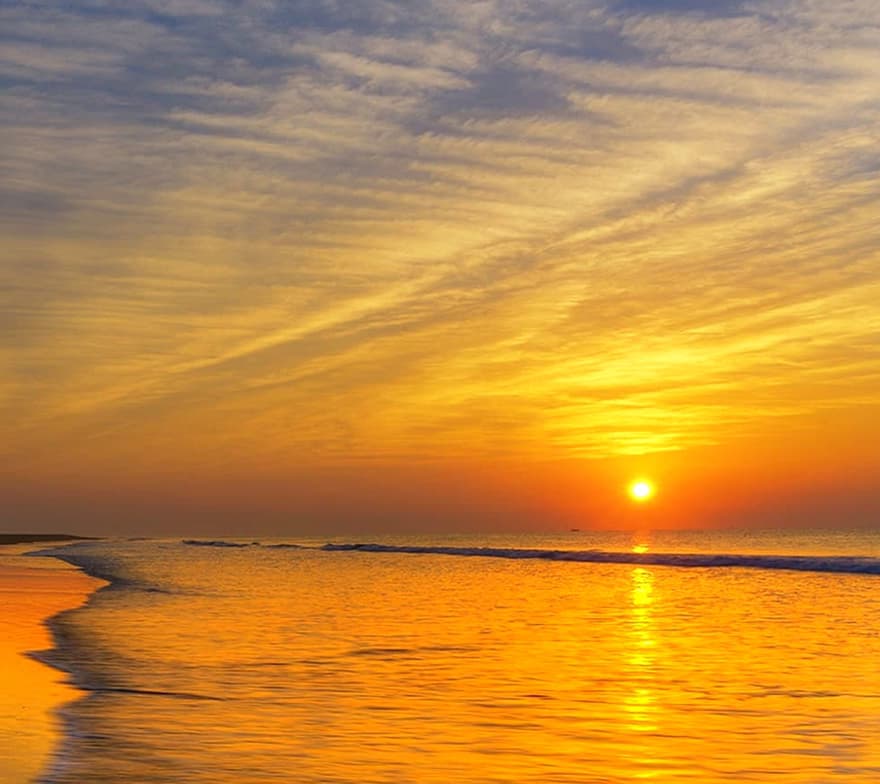
Gwadar attracts people for different reasons. Some come for the calm beaches and open sea views. Others come out of curiosity, wanting to see the city that is frequently mentioned in discussions about trade and development. Many visitors simply want a quiet coastal break that feels different from mainstream tourism spots.
A Gwadar tour usually revolves around simple experiences. Coastal viewpoints, relaxed drives, time by the sea, and short loops through the city. It is not a fast paced destination. Gwadar works best when you let it be slow and spacious.
Karachi
Clifton, Saddar
Lahore
Gulberg, Model Town
Islamabad
F-7, Blue Area
Trekking
Fairy Meadows, Margalla
Boating
Khanpur, Attabad
Mountaineering
Rakaposhi, Hunza Valley
Biryani
Sindhi, Lahore
Chapli Kebab
Peshawar, Tarru Jabba
Dry Fruit
Gilgit, Skardu, Quetta
Gilgit Baltistan
Polo Festival, Takhum Rezi
Khyber Pakhtunkhwa
Chilam Joshi, Buzkashi
Sindh
Camel Dance, Sindhi Day
Fabrics & Clothing
Ajrak, Balochi Tanka
Artisan Picks
Khussa, Jhumka
Collectables
Blue Pottery, Woven Baskets
Herbs & Spices
Thyme, Milk Thistle
Clothing & Textiles
Kashmiri Shawls, Cotton
Minerals
Gypsum, Aquamarine
