_(1)_(1).avif&w=3840&q=75 "Mohabbat Khan Masjid Peshawar")
Top rated
 Attraction
 Peshawar
 OpenAttractionPeshawarOpen
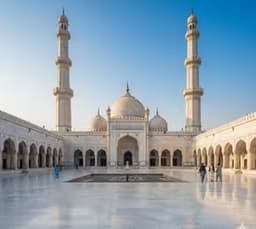
Bathed in white and framed by Peshawar's endless blue sky, Mahabat Khan Mosque stands silent yet commanding. This is not architecture, it is faith chiseled in stone. It is almost four hundred years old and this masterpiece of the Mughal much needed during the time has served as the spiritual pulse of Old Peshawar.
Its call to prayer rings through the bazaar streets every morning. During all its Eids thousands flock to its courtyard which is a practice as old as time. Every Eid, thousands gather in its courtyard, continuing a tradition older than memory.
Picture Peshawar in 1630-1670. The Mughal Empire was at its peak under Shah Jahan, the emperor who would later build the Taj Mahal. One of his governors called Nawab Mahabat Khan decided to make his mark here in this frontier city (Peshawar | Pakistan, Population, History, Map, & Location, 2025).
The result? A mosque that would outlive empires.
He was a great aristocrat who had served as governor of various states. This mosque shows his influence at the Mughal court as he was a very influential person.
The city of Peshawar was a key one as it was a passage gateway between Kabul and Delhi. Through trade caravans and armies and pilgrims. The mosque became their spiritual anchor.
What's remarkable is its survival. The Durrani rulers came and went. The Sikh Empire controlled the city for decades and the British made it their frontier headquarters. Through all this upheaval, Mahabat Khan Mosque stood firm, suffering minimal damage.
Go through the east entrance and you’ll gasp. The sun is bounced off white marble facade. There are twin minarets which are graceful.
Inside, you're surrounded by beauty. The walls are covered with delicate frescoes in the forms of floral patterns that tend to bloom out of stone.The calligraphy in Quranic scripts is a stream of graceful curves with each letter being a prayer by itself.
The prayer hall is even perfection, traditional Mughal style. Red brick and lime plaster work together, similar to Lahore's famous Badshahi Mosque but more intimate in scale. Notice the central ablution pool? It's not just functional. It adds serenity to the courtyard, reflecting sky and arches in its still water.
Here's something special: the courtyard sits slightly elevated. That's deliberate flood protection, smart architecture from an era without modern engineering. And the dome's acoustics? Whisper at one end and your voice carries across the entire hall. Stand under it during prayers and you'll feel the resonance in your chest.

This mosque isn't a museum. It breathes with life.
Go at sunrise and you will find men walking in to pray Fajr and you can hear the sound of their footsteps on the marble smoothed by centuries.
The marble floor has experienced four hundred years of faith. Evening lighting really makes the mosque a miracle in the period of Ramadan. Quran recitations fill the air, voices rising and falling in ancient melodies.
But Eid morning? That's when you see Mahabat Khan Mosque at its most powerful. The courtyard overflows with worshippers, thousands of them, shoulder to shoulder. It's a city-wide tradition, passed from grandfather to father to son.
Time takes its toll even on sacred places. That's why the Archaeology Department of Khyber Pakhtunkhwa has been working hard on restoration.
Frescoes get carefully repainted, structural weaknesses are reinforced and the precious calligraphy receives special conservation treatment. UNESCO and local tourism initiatives now promote Peshawar's Mughal monuments, and Mahabat Khan Mosque leads that heritage trail.
We all have a role here. When you visit, treat it with respect. This treasure belongs to future generations too.
You'll find the mosque in Andar Sheher Bazaar, near Chowk Yadgar in Old Peshawar. Can't miss it, just look for the minarets dominating the skyline.
The mosque opens from Fajr (dawn) through Isha (night prayer). For tourists, the best hours are 8 AM to 11 AM or late afternoon before Maghrib.
A few tips:
While you're there, explore nearby Qissa Khwani Bazaar and Namak Mandi. Make it a full heritage day.
Mahabat Khan Mosque represents something deeper than architecture. It is a sign of togetherness, which withstood centuries of political transition. Those minarets you see? They animated the tune of life in Old Peshawar.
Five times a day, they remind the city to pause and reflect. You'll see this mosque on postcards, in paintings, in tourism campaigns. It's become the face of Peshawar's spiritual heritage.
0
(0 Reviews)

Karachi
Clifton, Saddar
Lahore
Gulberg, Model Town
Islamabad
F-7, Blue Area
Trekking
Fairy Meadows, Margalla
Boating
Khanpur, Attabad
Mountaineering
Rakaposhi, Hunza Valley
Biryani
Sindhi, Lahore
Chapli Kebab
Peshawar, Tarru Jabba
Dry Fruit
Gilgit, Skardu, Quetta
Gilgit Baltistan
Polo Festival, Takhum Rezi
Khyber Pakhtunkhwa
Chilam Joshi, Buzkashi
Sindh
Camel Dance, Sindhi Day
Fabrics & Clothing
Ajrak, Balochi Tanka
Artisan Picks
Khussa, Jhumka
Collectables
Blue Pottery, Woven Baskets
Herbs & Spices
Thyme, Milk Thistle
Clothing & Textiles
Kashmiri Shawls, Cotton
Minerals
Gypsum, Aquamarine


-Feautured.avif&w=640&q=75)
.avif&w=640&q=75)

-Featured.avif&w=640&q=75)
_-_LOCAL_SCENES_(Peshawar)_-_Namak_Mandi.avif&w=640&q=75)
-Featured.avif&w=640&q=75)
_-_LOCAL_SCENES_(Peshawar)_Sethi_House_Museum.avif&w=640&q=75)
-Featured.avif&w=640&q=75)
_-_LOCAL_SCENES_(Peshawar)_-_Tatara_Park.avif&w=640&q=75)
-Featured.avif&w=640&q=75)
-_LOCAL_SCENES_(Peshawar)_-_Hujra.avif&w=640&q=75)
-Featured-.avif&w=640&q=75)
.avif&w=640&q=75)
-Featured.avif&w=640&q=75)
.avif&w=640&q=75)
-Featured.avif&w=640&q=75)
.avif&w=640&q=75)
-Featured.avif&w=640&q=75)
_%C3%A2%C2%80%C2%93_LOCAL_SCENES_(Gilgit_Baltistan)_Molida.avif&w=640&q=75)
-Featured.avif&w=640&q=75)
.avif&w=640&q=75)
-Featured.avif&w=640&q=75)
_%C3%A2%C2%80%C2%93_LOCAL_SCENES_(Gilgit_Baltistan)_Hoi_Lo_Garma.avif&w=640&q=75)
-Featured.avif&w=640&q=75)
_LOCAL_SCENES_(Gilgit_Baltistan)_%C3%A2%C2%80%C2%93_Kutwal_Lake.avif&w=640&q=75)

_(1)_(1).avif&w=640&q=75)
_Featured.avif&w=640&q=75)
_(2).avif&w=640&q=75)
-Featured.avif&w=640&q=75)
.avif&w=640&q=75)
-Featured.avif&w=640&q=75)
.avif&w=640&q=75)


 Glamp
Glamp
 Room
Room
 Guest House

 Resort